Product Description
Product Cost
| Quantity (KG) | Price |
|---|---|
| 1-2 KG | Please Request a Quote |
| 3-10 KG | Please Request a Quote |
| 11-25 KG | Please Request a Quote |
| 26-100 KG | Please Request a Quote |
Product Notes
ERG No. 133
Requires an Export License, Hazmat Disclaimer and End-Use Statement.
Must ship by FedEx Hazmat (No UPS)
Atlantic Equipment Engineers, Inc. is a highly trusted, customer service-oriented company. The quality of our products is of absolute importance, but our sixty plus years of metal powder expertise is just the beginning. Factors such as product availability from stock, custom packaging and highly specialized packaging required for safe and reliable delivery are just as crucial to meeting and exceeding your expectations.
Product Document Sheets
Specifications
| Formula | 5 B 10.811 |
|---|---|
| Purity | 99 |
| Particle Size | 1-5 micron APS |
| ECCN | 1C011.b |
| Schedule B | 2804.50.0010 |
| CAS | CAS-7440-42-8 |
| Melting Point | 2100°C / 3812°F |
| Boiling Point | 2600°C / 4712°F |
| Density | 2.35 g/cm3 |
| Coef. of Expansion @ 20°C | 5–7µm/m·k |
| Crystal Structure | Hexogonal |
| Electric Resistivity | ~106 O·m |
| Composition | B |
Form
Applications
Request a Quote
View Quote (0 Items)Q: What is amorphous boron?
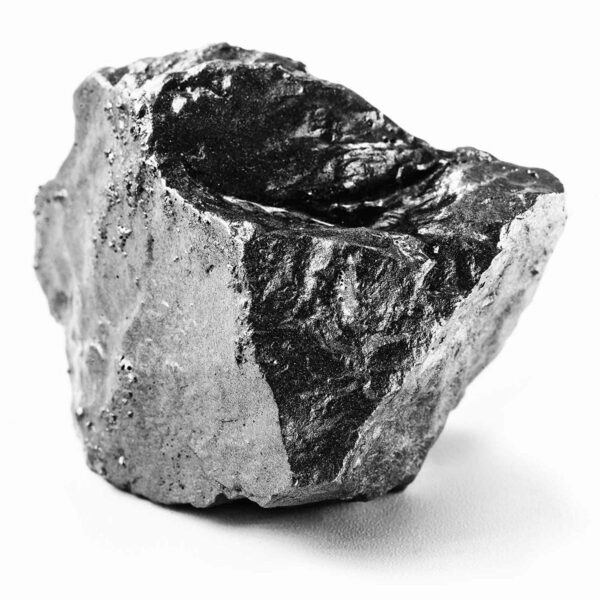
Amorphous boron is elemental boron in a non-crystalline form, meaning its atoms have no repeating long-range lattice structure. It appears as a dark brown to black fine powder, in contrast to the dark, metallic-looking granules or lumps of crystalline boron. The absence of atomic order, combined with the small particle sizes the material is typically produced in, gives amorphous boron a much larger reactive surface area than crystalline boron of the same mass. That is the property most applications are specifying it for.
Q: What is the difference between amorphous and crystalline boron powder?
Amorphous boron ignites and reacts more readily, which is why it is chosen for energetic formulations, propellant fuels and brazing compositions where boron needs to participate in a reaction. Crystalline boron is harder, more chemically stable and closer to the properties of a refractory material, which suits abrasives, ceramics and metallurgical additions where stability matters more than reaction rate. Purity ranges also differ between the two forms because their production routes are different.
Q: Why is amorphous boron used in propellant and pyrotechnic formulations?
Boron has one of the highest heats of combustion per unit mass of any solid fuel element, which makes it attractive where energy density matters and volume is constrained. The amorphous form is preferred over crystalline boron in these applications because its higher surface area allows it to ignite and burn at usable rates. Particle size control is critical here, and BO-240 is supplied at 1-5 µm APS for this reason.
Q: Why does boron powder absorb neutrons?
The effect comes from the boron-10 isotope, which occurs naturally in elemental boron alongside boron-11. Boron-10 has an unusually high capture cross-section for thermal neutrons, absorbing them rather than allowing them to pass through or scatter. This makes boron a standard material in reactor control rods, neutron shielding and neutron detection assemblies. Natural-abundance boron, such as BO-240, is used where enriched boron-10 is not required.
Q: What can BO-240 be used for?
BO-240 is specified across aerospace, defense, nuclear, ceramics and metallurgical applications. In energetic and propellant work, it serves as a high-energy solid fuel, and in nuclear work, as a neutron absorber in control and shielding components, both of which are covered above.
Beyond those, boron is added to metals as a hardening element and a melting-point depressant in high-temperature brazing filler alloys. It reinforces metal and ceramic matrix composites and is used to coat tungsten filament substrates in the production of boron fiber.
Research and development laboratories also draw on the material to synthesize boron compounds and borides. The 1- to 5-micron particle size makes BO-240 suited to applications where dispersion and reaction rate matter more than bulk-handling convenience.
Q: What purity, particle size and quantities is BO-240 available in?
BO-240 is supplied at 99% purity with an average particle size of 1 to 5 microns. Laboratory quantities are stocked in 10 g, 50 g and 100 g units for research and qualification work. Production volumes are quoted in 1 to 2 kg, 3 to 10 kg, 11 to 25 kg and 26 to 100 kg ranges, with pricing that follows prevailing market rates for boron. Atlantic Equipment Engineers also supplies amorphous boron powder in lower-purity grades and sub-micron particle sizes and can discuss requirements that fall outside the listed options.
Q: Why does amorphous boron powder require hazmat shipping and an export license?
The powder is classified UN 3178, Flammable Solid, Inorganic, N.O.S. (Boron), Class 4.1, because finely divided boron is combustible. It ships as hazardous material via FedEx only. Separately, boron at this purity and particle size is subject to export control classification ECCN 1C011.b, so Atlantic Equipment Engineers requires an export license and end-use documentation before shipment. Both requirements apply regardless of order size, including laboratory quantities.