How Does Manganese Powder Influence Hardness and Wear Resistance in Alloys?
Alloying elements are fundamental to engineering metals with targeted mechanical properties. Among them, manganese is one of the most widely used additions in steels and specialty alloys, valued for its ability to modify microstructure and improve resistance to deformation and degradation.
For engineers and manufacturers working with engineered metals, understanding how manganese powder influences hardness and wear resistance in alloys is a practical starting point for material selection and process design.
What Is Manganese Powder and How Is It Used in Alloy Production?
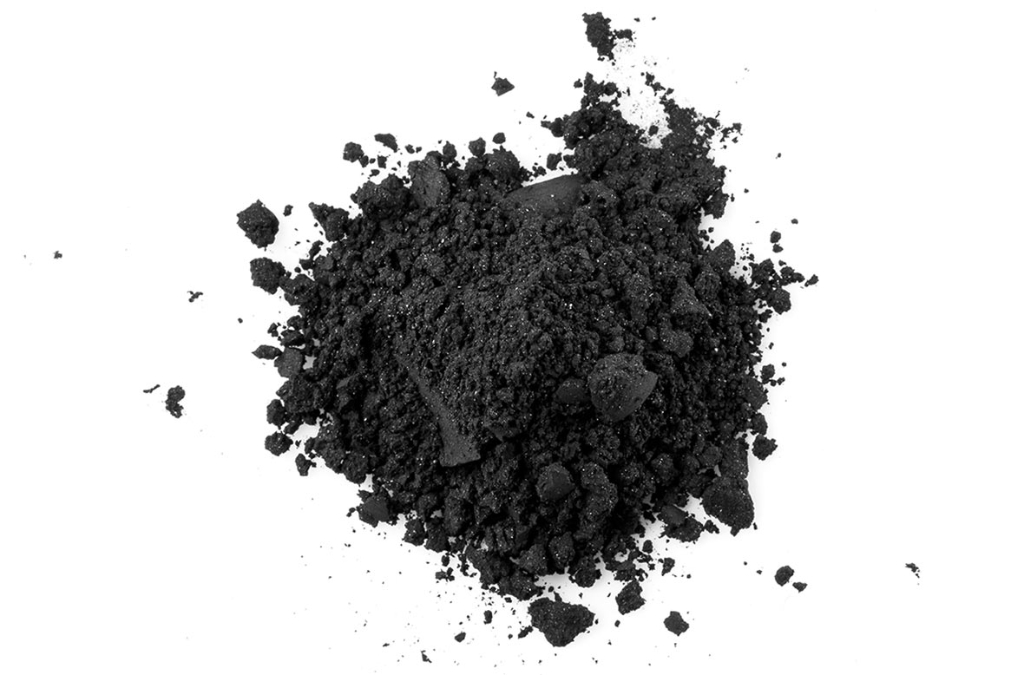
Manganese powder is finely divided manganese metal used to introduce controlled quantities of manganese into alloy systems. Its fine particle form makes it well-suited for applications that require precise compositional additions, including powder metallurgy blends, melt additions, and specialized manufacturing processes where accuracy in elemental content is critical.
Manganese is one of the most common alloying elements in steels and engineering alloys. Its influence on strength, toughness, processability, and microstructural stability makes it applicable across a broad range of industrial and structural materials. When used in powder form, it supports tighter control over the amount added and how it is distributed within the alloy system.
Metallurgical Functions of Manganese in Alloys
Manganese performs several important roles during alloy production. It acts as a deoxidizer and desulfurizer, helping remove oxygen and sulfur from the melt, elements that, if left in the material, can form inclusions that reduce toughness and degrade mechanical performance.
Beyond processing, manganese contributes to solid-solution strengthening. When manganese atoms are incorporated into the metal lattice, they introduce local distortions that impede dislocation movement, increasing the material’s resistance to plastic deformation. Manganese also affects phase stability and microstructure, which directly influences properties such as hardness, toughness, and hardenability in steels and other alloy systems.
How Manganese Powder Contributes to Hardness in Alloys
Hardness in alloys is closely tied to the mechanisms that resist dislocation movement and plastic deformation within the crystal structure. Manganese contributes to hardness through two primary pathways: solid-solution strengthening and improved hardenability.
When manganese atoms are distributed within the metal lattice, they obstruct dislocation motion, requiring greater applied stress to produce deformation. This effect increases the alloy’s resistance to indentation and surface deformation, which is the physical basis of hardness.
Manganese also improves hardenability in steels — the ability of a steel to form hardened microstructures, such as martensite, through heat treatment, even in thicker cross-sections. This is well established in steel metallurgy: manganese is among the most effective common alloying elements for increasing hardenability, enabling engineers to achieve consistent through-thickness hardness in structural and mechanical components. Controlled manganese content, combined with appropriate heat treatment, allows manufacturers to specify and reliably achieve target hardness values in finished parts.
The Role of Manganese in Wear Resistance

Wear resistance describes a material’s ability to withstand surface loss or degradation caused by abrasion, impact, and repeated mechanical contact. Manganese improves this property through several mechanisms, though the extent of its effect depends on alloy composition and manganese content.
In many alloy systems, manganese increases resistance to abrasive and impact wear. In high-manganese austenitic steels — typically containing 11–14% manganese — a particularly significant phenomenon occurs: work hardening. Under repeated mechanical stress or impact, the surface of these alloys undergoes strain hardening, progressively increasing surface hardness while the bulk material retains toughness. The result is a material that becomes more resistant to wear precisely where it is subjected to the most mechanical load.
This combination of surface hardening and bulk toughness makes high-manganese austenitic steels effective in applications where neither hardness nor toughness alone is sufficient.
Industrial Applications of Wear-Resistant Manganese Alloys
Manganese alloys are used in demanding operating environments across several industries:
- Mining and aggregate processing: Wear components such as crusher jaws, liners, and bucket teeth are frequently produced from manganese alloys due to their resistance to continuous abrasion from ore, rock, and other hard materials.
- Rail and transportation: Manganese-containing alloys are used in rail crossings, switches, and other components that experience repeated impact, friction, and cyclic loading over extended service lives.
- Heavy industrial machinery: Components exposed to high loads and ongoing mechanical wear benefit from manganese alloys’ ability to resist surface degradation while maintaining structural integrity.
Why Powder Form Matters in Alloy Production
The use of manganese in powder form offers specific advantages in metallurgical and manufacturing processes. Powdered alloying elements enable precise compositional control, which is critical when engineering materials to meet defined mechanical property targets.
Fine powders also support a more uniform distribution of manganese within alloy blends. In powder metallurgy, this homogeneity directly affects the consistency of the resulting material’s properties. Poorly distributed alloying elements can create local variations in hardness, microstructure, and wear behavior, outcomes that are particularly problematic in structural or safety-critical components.
In additive manufacturing, particle size and morphology have a direct effect on powder flowability, packing density, and the quality of the final consolidated part. Manganese powders used in these processes must meet tightly controlled specifications to ensure predictable behavior during printing and post-processing.
Selecting Materials for Consistent Alloy Performance
Alloy performance is not determined by composition alone. Powder purity, particle size distribution, and batch-to-batch consistency all contribute to whether a manufactured component will behave as engineered. Variations in powder quality can introduce inconsistencies in hardness, microstructure, and wear properties that are difficult to trace or correct after production.
Reliable sourcing from a qualified supplier helps ensure materials meet the compositional and physical specifications required by engineers and manufacturers. ISO 9001 certified quality systems, lot traceability, and full documentation provide the framework for verifying that each batch of material meets defined standards before it enters production.
AEE supplies manganese powder and a broad catalog of high-purity metal powders supporting metallurgy, additive manufacturing, and specialty alloy production. Each material is produced under ISO 9001-certified processes with complete lot documentation to support quality-critical manufacturing environments. Engineers sourcing materials for specific alloy applications can contact Atlantic Equipment Engineers to discuss requirements, specifications, and available material forms.
Manganese’s Role in Durable Engineering Alloys
Manganese is a practical and well-established alloying element with measurable effects on both hardness and wear resistance. Through solid-solution strengthening, improved hardenability, and the strain-hardening behavior characteristic of high-manganese austenitic steels, it provides engineers with reliable mechanisms for improving mechanical performance in demanding applications.
The consistent delivery of these properties depends on controlled alloy composition and high-purity input materials. Precise particle size, verified purity, and traceable sourcing are the factors that translate metallurgical knowledge into repeatable manufacturing outcomes.

Other Articles by
-
How Chromium Powder Enhances High-Temperature Performance in Industrial Alloys
-
Metal Powders and the World of Bullets and Fireworks
-
Tin Metal Powder in Electronics: Conductivity and Soldering Performance
-
What Is the Difference Between Titanium Sponge and Titanium Powder?