Comparing Atomized vs. Mechanically Processed Powder Metals
The performance of metal powders in manufacturing and research applications depends heavily on how those powders are produced. Before a powder reaches a press, a powder bed, or a reaction vessel, its production method has already determined its particle shape, size distribution, surface area, and flow behavior.
For engineers and researchers selecting materials for powder metallurgy, additive manufacturing, sintering, coatings, or chemical processes, understanding the differences between atomized and mechanically processed powder metals is a practical necessity.
This article compares the two primary production approaches, explains how each influences particle characteristics, and outlines which applications each method best serves.
What Are Atomized Powder Metals?
Atomized powder metals are produced by disrupting a stream of molten metal into fine droplets, which rapidly solidify into discrete particles. The process begins with melting the base metal, then subjecting the molten stream to a disruptive force that breaks it apart before solidification.
Three atomization techniques are most common in industrial production.
Gas atomization uses high-pressure inert gas, typically argon or nitrogen, to disperse the molten metal stream. Solidification occurs in a controlled atmosphere, producing near-spherical particles with relatively narrow size distributions and minimal contamination.
Water atomization uses high-pressure water jets to fragment the melt. The process is generally less expensive and capable of higher throughput, but the faster cooling rate and the kinetic energy of water produce more irregular particle shapes. Water atomization also introduces higher oxygen content into the powder compared to gas atomization.
Centrifugal atomization uses a spinning disk to fling molten metal outward, where droplets solidify in flight. This method produces highly spherical particles and is used for specialty alloy powders requiring tight morphology control.
The result across all three methods is a powder with controlled morphology and a predictable particle size distribution, both critical for processes that demand consistent lot-to-lot material behavior. The differences between methods, particularly in particle shape and oxygen content, have measurable consequences in downstream manufacturing.
A 2020 study titled ‘A Comparative Study of Water and Gas Atomized Low Alloy Steel Powders for Additive Manufacturing’ found that track height using water-atomized powder was 15% lower than with gas-atomized powder under equivalent laser parameters, with more frequent spatter ejection attributed to the higher oxygen content in water-atomized material.
Advantages of Atomized Powder Production
The primary advantage of atomized powders is flowability. Near-spherical particles move efficiently through automated equipment, fill powder beds uniformly, and pack with consistent density, all of which are essential factors in additive manufacturing and precision powder metallurgy.
Controlled particle size distributions also support predictable sintering behavior. When particle sizes fall within a defined range, compaction and densification during sintering are more uniform, which improves the mechanical properties of the finished part.
When atomization is performed in inert or controlled atmospheres, the resulting powders can achieve high purity with minimal oxidation, a requirement for aerospace, medical, and semiconductor applications.
What Are Mechanically Processed Powder Metals?
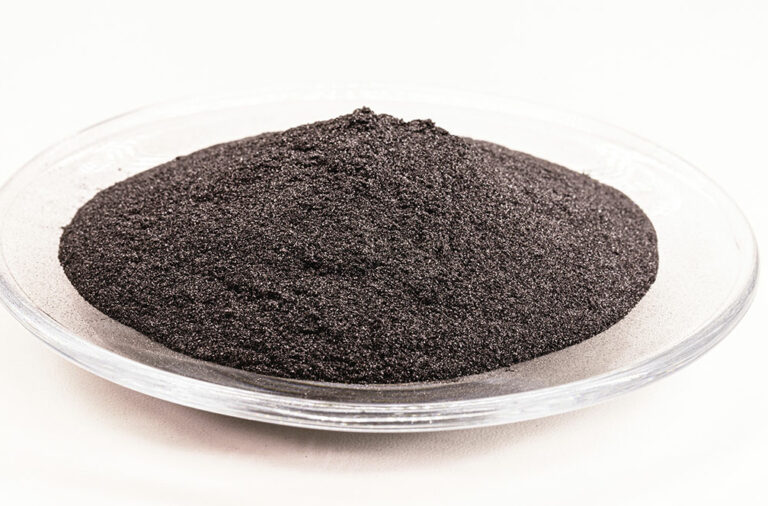
Mechanically processed powder metals are produced by physically breaking down solid metal into finer particles through applied mechanical force. Rather than working from a molten state, these processes start with solid bulk metal and reduce it through methods such as crushing, grinding, milling, and mechanical alloying.
Ball milling is among the most widely used mechanical processes. Metal pieces or coarse powder are placed into a rotating drum with grinding media. Repeated impact and attrition progressively reduce particle size through a cycle of fracturing, cold welding, and re-fracturing. The resulting particles are typically irregular or flake-like, with significantly higher surface area than atomized equivalents.
Mechanical alloying is a specialized variant of the milling process originally developed in the late 1960s to produce oxide-dispersion-strengthened (ODS) nickel- and iron-base superalloys for aerospace gas turbine applications. Rather than simply reducing particle size, it blends multiple metal powders under sustained mechanical energy, producing composite particles with alloyed compositions at the powder level. This enables alloy combinations that may be difficult or impractical to achieve through conventional liquid-state processing.
Advantages of Mechanical Powder Processing
The irregular particle geometry produced by mechanical processing is not a limitation in every application. In thermal spray coatings and certain pressing operations, angular particles interlock mechanically with surrounding material, improving adhesion and green strength in compacted forms, making mechanically processed powders a practical choice for press-and-sinter applications.
Mechanical alloying allows manufacturers to engineer alloy compositions at the powder stage, combining metals with different melting points or metals that form undesirable phases in liquid-state processing. This makes it a practical route for producing oxide-dispersion-strengthened alloys and other advanced material systems.
Some metals and intermetallic compounds are inherently brittle, making atomization impractical. For these materials, mechanical size reduction is often the most efficient path to a usable powder form.
Key Differences Between Atomized and Mechanically Processed Powder Metals
The distinctions between production methods carry direct consequences for material behavior in downstream processes.
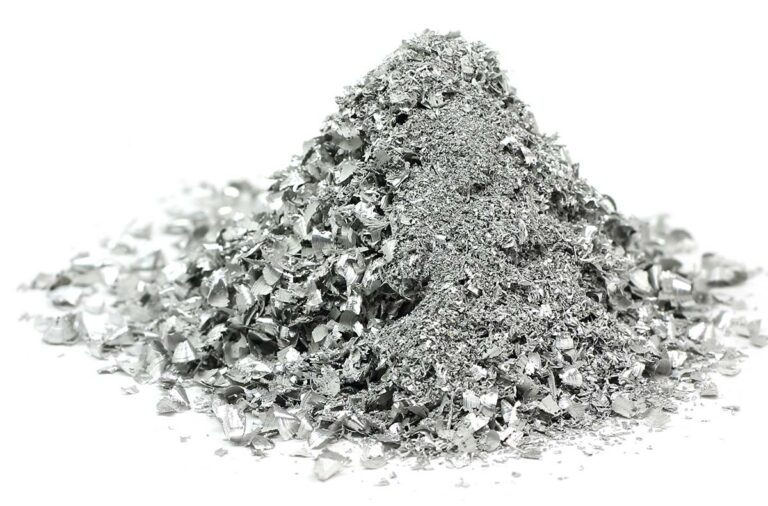
Particle shape is the most immediate difference. Atomized powders, particularly those produced by gas atomization, are predominantly spherical. Mechanically processed powders are irregular, often angular or flake-shaped, depending on the material and processing parameters.
Flow behavior follows from particle shape. Spherical powders flow more freely through hoppers, feed systems, and powder beds. This makes them the standard choice for laser powder bed fusion, directed energy deposition, and other additive manufacturing processes where consistent powder delivery directly affects part quality. Irregular powders exhibit greater interparticle friction, which limits flowability but can be advantageous in pressing and coating applications.
Surface area is higher in mechanically processed powders due to the angular, fractured particle geometry. Increased surface area accelerates reaction kinetics, which is valuable in chemical synthesis, catalysis, and certain energetics-related applications, but can also increase susceptibility to oxidation during storage and processing.
Particle Size, Morphology, and Purity Considerations
Across both production methods, particle morphology affects flowability, packing density, and compaction behavior — three variables that directly influence the quality and reproducibility of manufactured components.
Particle size distribution shapes sintering behavior, layer uniformity in additive manufacturing, and reaction kinetics in chemical applications. A tightly controlled distribution produces more consistent results than a broad one, particularly in processes where layer-by-layer consistency determines part quality.
Purity and lot-to-lot consistency are equally significant. In high-performance applications, trace contamination or batch-to-batch variation can compromise final part properties or process repeatability. Controlled production methods, combined with rigorous documentation and traceability, enable manufacturers to integrate metal powders into safety-critical systems with confidence.
Choosing the Right Powder for Your Application
Powder selection begins with a clear understanding of what the downstream process requires.
Flowability requirements are paramount in additive manufacturing. Laser powder bed fusion and binder jetting systems require powders that spread and pack uniformly across a build platform. Gas-atomized, near-spherical powders with controlled particle size distributions are the established standard for these processes.
Surface reactivity becomes relevant when the powder undergoes a chemical reaction, is used as a catalyst, or serves as a sintering precursor. Mechanically processed powders, with their higher surface area, may offer faster reaction kinetics in these contexts.
Alloy composition can also drive the decision. When an application requires a specific alloy that cannot be produced through conventional atomization, mechanical alloying provides a viable alternative, enabling compositions that include refractory components or oxide dispersoids.
Purity requirements in aerospace, medical, and semiconductor manufacturing typically point toward gas-atomized powders produced in controlled atmospheres, where contamination risks are minimized throughout the process.
For engineers and researchers who need guidance on material selection, AEE’s technical team can support the evaluation process and identify powders suited to specific process and application requirements.
Industries That Depend on Powder Metals
Metal powders are foundational materials across a broad range of industries. The specific characteristics required vary by application, but the consistent requirement is access to reliable, traceable, high-purity materials.
Aerospace manufacturers use high-purity metal powders in lightweight structural components, thermal management systems, and the additive manufacturing of complex geometries. Tight purity and morphology controls are standard requirements.
Defense applications include specialized manufacturing processes, high-performance engineered components, and materials research where particle characteristics directly influence performance outcomes.
Electronics and semiconductor manufacturing rely on conductive metal powders and specialty materials for circuit fabrication, conductive coatings, and thin-film deposition, where purity requirements are often extremely demanding.
Additive manufacturing operations depend on controlled particle size distributions and spherical morphology to achieve consistent layer deposition, accurate part dimensions, and repeatable mechanical properties.
Laboratory and research institutions require access to small-batch powders for materials testing, experimental alloy development, and prototyping, where precise quantities and full documentation are critical.
Atlantic Equipment Engineers supplies high-purity metal powders to support all of these industries, with materials available across a range of particle sizes, purities, and order quantities to meet both research-scale and production requirements.
Powder Production Methods and Their Role in Material Performance
The choice between atomized and mechanically processed powder metals is not a matter of one method being categorically superior. Each produces powders with distinct physical characteristics, and those characteristics determine suitability for a given application.
Atomized powders offer controlled morphology, high flowability, and consistent particle size distributions, properties that make them the standard in additive manufacturing and precision powder metallurgy. Mechanically processed powders offer higher surface area, flexible alloy composition, and practical routes to powder forms for brittle or refractory materials, making them well-suited for coatings, chemical processes, and specialty alloying applications.
In either case, consistent quality, full traceability, and reliable documentation are what allow these materials to perform dependably in applications where performance margins are narrow.
Atlantic Equipment Engineers is a trusted metal powder supplier with over 60 years of experience serving engineers, researchers, and manufacturers worldwide. Contact AEE to discuss your powder metal requirements.