How Metal Reduction Processes Use Iron Powder as a Chemical Reducing Agent
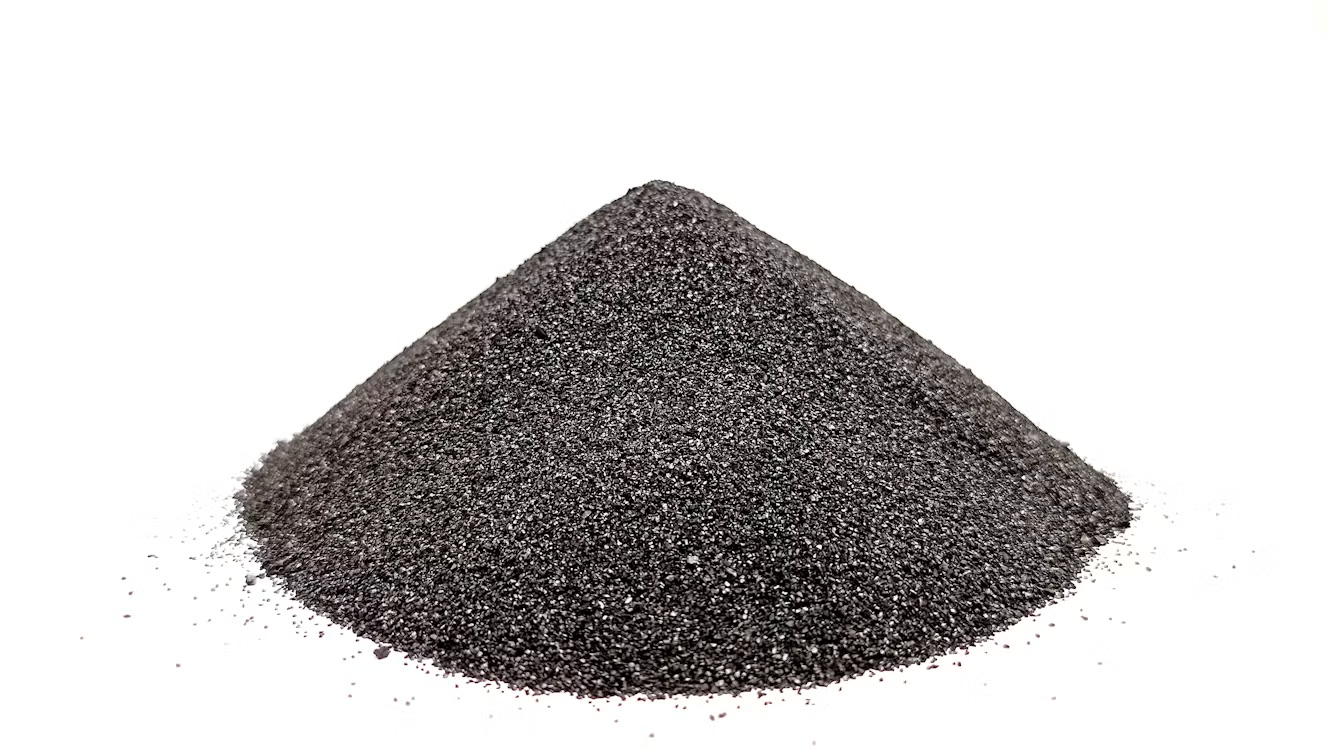
Iron powder acts as a chemical reducing agent because iron gives up electrons to ions of less reactive metals, precipitating them as solid metal. When iron meets a dissolved metal ion that sits below it in reactivity, the iron is oxidized and the other metal is reduced, and that single exchange is the reaction industry harnesses again and again.
What makes iron so dependable in this role is that it is only moderately reactive. It has enough drive to displace less reactive metals such as copper and silver, but not so much that it resists being displaced itself by more reactive metals such as zinc. That middle position in the activity series is exactly what lets a chemist or process engineer predict, before running anything, which reductions iron will carry out and which it will not.
That predictability is why iron powder shows up across so many industrial settings, from the hydrometallurgical recovery of metals to the treatment of contaminated water to the production of specific compounds. However, chemistry alone does not decide how well it works in any of them. Particle size and purity govern how quickly and how completely iron powder reduces a target species, and both are examined later in the post.
The Electrochemistry Behind Iron as a Reducing Agent
Every displacement reaction is really two half-reactions happening at once: one metal loses electrons while another gains them. When iron powder reduces a dissolved metal ion, iron gives up two electrons to form an iron(II) ion. Those electrons pass to the dissolved ion, which gains them and settles out as solid metal. Iron earns the label reducing agent precisely because it is the electron donor in that trade.
Whether the trade occurs at all depends on the standard reduction potential. For the iron(II) to iron couple, that figure is roughly negative 0.44 volts, low enough that iron will readily hand its electrons to any ion whose potential is higher and more positive. The activity series is simply these potentials lined up in order, which is why it serves as a quick reference for which metals iron can pull out of solution and which it cannot.
The wider the gap between iron and the target ion, the more strongly the reaction is driven, and copper shows this clearly. Its copper(II) to copper couple sits well above iron on the scale, so dropping iron powder into a copper sulfate solution sets off the reaction Fe + Cu²⁺ → Fe²⁺ + Cu with no prompting, plating out metallic copper and leaving iron(II) dissolved in its place. Stretch that gap and the driving force grows with it, which is why iron reaches for some ions eagerly and ignores others entirely.
Industrial Processes That Rely on Iron Powder as a Reductant
That same beaker reaction turns up, scaled and controlled, across a handful of established industrial operations. Three of them show how much range a single piece of chemistry can cover, and in each, the choice of iron powder over other forms of iron comes back to the same practical reasons.
Cementation in Hydrometallurgy
In hydrometallurgy, the deliberate version of copper displacement is called cementation, and iron is the reductant that does most of the work. Copper dissolved in leach liquors and process solutions is recovered by adding iron powder, which drives the copper out as a solid deposit that can then be collected and refined. According to research published in the Royal Society of Chemistry on the hydrometallurgical recovery of high-purity copper from waste printed circuit boards, iron-based cementation remains an effective route for reclaiming copper, even from complex feed streams.
Operators reach for powder rather than scrap or plate due to its greater surface area. A fine powder exposes far more iron to the solution, and more exposed iron means more sites where electrons can transfer, so recovery runs faster and finishes more completely. At the production scale, that advantage shows up directly in throughput and in how much metal actually comes back.
Treatment of Contaminated Water
Iron powder and zero-valent iron have the same electron-donating ability, but to different ends: cleaning contaminants out of water rather than pulling a valuable metal from solution. They reduce dissolved pollutants to forms that move less freely or pose less of a hazard, including certain chlorinated organic compounds and hexavalent chromium. Hexavalent chromium, or Cr(VI), is both mobile and toxic, and iron converts it to trivalent chromium, or Cr(III), which is far less soluble and drops out of the water as a precipitate. According to a study in Water, Air, and Soil Pollution on hexavalent chromium reduction with zero-valent iron in aquatic systems, this reductive route is well-suited to chromium treatment in aquatic environments.
That is why the approach has found a home in groundwater remediation and industrial wastewater streams, where converting a hazardous dissolved ion into a solid that can be filtered out is often the most practical option available.
Reduction Steps in Compound and Intermediate Production
The same controllability makes iron powder useful in chemical manufacturing, wherever a reduction step must occur in a measured, repeatable way. A long-established case is the conversion of nitroaromatic compounds into amines, the building blocks behind many dyes, pigments, and pharmaceutical intermediates.
Iron serves a comparable purpose when a higher-valence metal ion needs to be reduced to a lower-valence salt to reach a specific oxidation state. In both, the appeal is identical. Iron chemistry is consistent and thoroughly understood, so its yields land where they are expected to batch after batch, which is what a specification-driven product demands.
Why Particle Size and Purity Shape Reduction Performance
For all the emphasis on iron’s chemistry, two physical properties determine how well a given powder actually performs, and both trace back to the same question. How much reactive iron can the reaction reach and how consistently does it behave?
Surface area sets the pace. Finer particles pack more reactive sites into the same mass, so they reduce a target species faster than coarse powders or solid forms can. A tightly controlled particle-size distribution also matters, as it ensures the reaction behaves consistently from one batch to the next, and any process built around consistent timing and conversion relies on that repeatability.
Purity determines how much iron actually participates in the reaction. A layer of surface oxide can passivate particles and shut down electron transfer, while other contaminants can trigger side reactions that consume the reagent and muddy downstream steps.
Taken together, purity and particle size govern how quickly a reduction finishes, how closely batches match one another, and how free the process remains of wasted reagent and unwanted chemistry. That is why iron powder for reduction work is specified rather than simply ordered, with both properties intentionally matched to the process’s needs.
Sourcing Iron Powder for Reduction Applications
Atlantic Equipment Engineers supplies iron powder across a range of purities and controlled particle sizes chosen for chemical reduction work, including atomized iron powder produced to consistent specifications. Whether the job is recovering copper, treating water, or running a controlled reduction inside a synthesis, matching the material to the application is what keeps the result predictable.
Behind that consistency sit ISO 9001 certified processes, lot traceability, and controlled particle size, the things that let a reduction repeat reliably instead of drifting from lot to lot. A reduction step, after all, is only as steady as the reagent driving it.
Engineers and procurement teams choosing iron powder as a chemical reducing agent can contact Atlantic Equipment Engineers to determine the purity and particle size their reduction application requires.

Other Articles by
-
How Does Manganese Powder Influence Hardness and Wear Resistance in Alloys?
-
Tin Metal Powder in Electronics: Conductivity and Soldering Performance
-
Custom Alloys- Technology Taking Form
-
Comparing Atomized vs. Mechanically Processed Powder Metals